
Hip Dysplasia (Child)
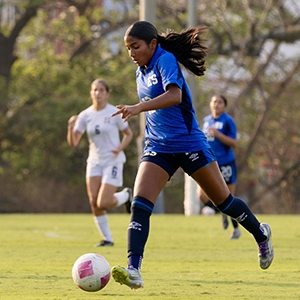
My name is Maya, and I am a 16-year-old competitive soccer player.
Before all of this, I honestly did not think anything was wrong with my hips. Looking back, there were signs. My hips would pop, and sometimes I would feel discomfort, but I thought it was normal. I never saw it as something serious because I was still able to do everything I loved. I was training, competing, and living my life like any other athlete.
At the time, soccer was my entire world. I was playing league soccer, training with a professional team while trying to earn a spot, and representing El Salvador internationally. My life revolved around practices, games, travel, and chasing bigger opportunities. The last thing I expected was to find out that there was actually something wrong with my hips.
Then, in September 2025, when I was 15 years old, I was diagnosed with bilateral hip dysplasia. Honestly, I was shocked. I think what made it so confusing was that I was still playing at a high level. I was not in constant pain, and I did not feel injured in the way people usually think of injuries. I could still train. I could still compete. So hearing that I had hip dysplasia and that I would need surgery was hard to process.
As I learned more about my diagnosis, I found out that I had inherited hip dysplasia from my mom. Because my hip sockets did not provide enough coverage, the instability had caused me to tear the labrum in both of my hips.
Another thing that made the diagnosis feel very real was that my older sister had actually gone through the same thing a few years earlier at around the same age. Seeing her experience and hearing her talk about what she went through gave me an idea of what to expect. Obviously, it was still scary because now it was happening to me, but having someone so close to me who truly understood the process helped a lot. She was able to answer questions, share advice, and remind me that even though recovery would be long and difficult, I would get through it.
Looking back, having her support and perspective throughout this journey has meant so much to me.
Suddenly, a lot of things started to make sense. The popping, the discomfort, and the little things I had ignored for years were not actually normal. Even though I was still able to perform, I knew this was something I could not keep putting off. If I wanted to continue playing soccer for years to come, I had to take care of it now.
In the weeks leading up to surgery, I had a lot on my mind. My first surgery, a right hip arthroscopy, was on October 14, 2025, followed by a right Periacetabular Osteotomy on October 28. I knew this was not going to be a quick recovery. I knew I was stepping into something that would completely change my daily life for a while.
What overwhelmed me the most was not really the surgery itself. It was everything that came after. I knew I would be spending months in physical therapy. I knew there would be pain. I knew I would miss training, games, and opportunities. I knew I would have to watch other people continue living the life I loved while I focused on recovery.
One moment that really stuck with me happened before surgery when I walked into the Paley Institute. I remember sitting in the waiting room and looking around at the other patients and families. I saw kids who were dealing with challenges much bigger than mine. I saw pictures on the walls of children overcoming incredibly difficult medical conditions. Some of the stories I saw were heartbreaking, but at the same time they were inspiring.
I remember thinking, “If these kids can go through all of that and keep fighting, then I can get through this too.”
That moment gave me perspective. Before that, I was so focused on everything I was about to lose. But sitting there made me realize how much strength people can have when they are faced with difficult situations. It reminded me that everyone is carrying something, even if you cannot see it.
Mentally, that part of the journey was just as hard as the physical side. One of the hardest things was watching life keep moving while mine felt like it was on pause. I would see teammates training, competing, traveling, and playing in tournaments while I was at physical therapy. I was happy for them, but at the same time it hurt because all I wanted was to be out there with them.
What I missed was not just soccer itself. I missed the routine. I missed being part of a team every day. I missed the excitement before games and the feeling of working toward something bigger than myself.
There were definitely days where it felt heavy. Not because I wanted to quit, but because I felt like there was nothing more I could do. I was doing everything I was supposed to do. I showed up to physical therapy. I did my exercises at home. I stayed consistent. But no matter how hard I worked, I could not make my body heal faster.
That was probably one of the biggest lessons for me. As athletes, we are used to working harder when we want better results. Recovery does not always work like that. Sometimes you have to trust the process and be patient, even when that is the last thing you want to do.
Throughout all of it, my faith in God helped me stay grounded. There were times when I did not understand why this was happening, especially when soccer was going so well and I felt like I was making progress toward my goals. But even when I did not understand it, I trusted that God had a purpose for it.
Looking back now, I really believe He used this experience to teach me things I never would have learned otherwise.
After my right Periacetabular Osteotomy on October 28, 2025, everything became very real. I basically had to start over. I remember how exciting it felt the first time I took steps again. Something as simple as walking became a huge milestone.
I was on crutches for about two months, and once I got off them, every little improvement felt like a victory. Physical therapy became my life. At first, the goals were small. Getting my range of motion back. Regaining strength. Learning how to control movements again. Trusting my body again.
Eventually those small wins started turning into bigger ones. One of the moments I remember most was jogging again for the first time. It probably did not look like much from the outside, but to me it felt huge. After everything I had been through, being able to jog again felt like proof that I was actually moving forward.
After about four and a half months of physical therapy on my right side and another month of performance training, something happened that meant the world to me. I was called up to train with the senior El Salvador Women’s National Team. I still remember how grateful I felt. Just months earlier, I had been learning how to walk again. There were moments during recovery when getting back to soccer felt so far away. Then suddenly I was back in a national team environment competing alongside players I looked up to. It reminded me that all the hard work was worth it.
Not long after that, I had the opportunity to represent El Salvador in the Concacaf U-17 Women’s World Cup Qualifiers. Putting that jersey on after everything I had gone through was emotional. I remember standing there and thinking about where I had been only a few months earlier. The surgeries. The crutches. The rehab. The frustration. The uncertainty.
It made me realize how far I had come. For the first time, I was able to look back and truly appreciate the progress instead of focusing on how far I still had to go.
Soon after, I had to begin the process all over again. On March 31, 2026, I underwent a left hip arthroscopy to repair my torn labrum. Then, on April 13, 2026, I had my left Periacetabular Osteotomy.
Going through recovery a second time has been different. In some ways, it is easier because I know what to expect. I know the stages. I know the timeline. I know that progress eventually comes. But in other ways, it is harder because I remember exactly how long the first recovery felt. It means crutches again. Learning to walk again. Building strength again. Trusting the process again.
The biggest difference this time is that I know what is waiting for me on the other side.
One of the biggest things this journey has taught me is how much I took my body and soccer for granted before all of this. Now I notice everything. Every little improvement means something. Being able to move better. Getting stronger. Reaching a new milestone in rehab. Those things might seem small, but when you have had something taken away from you, you learn to appreciate every step forward.
I am still recovering, but my goal has never changed. I want to get back to the sport I love. This has easily been one of the hardest things I have ever gone through, but it has also shown me how much stronger I am than I thought. It has taught me patience, resilience, gratitude, and faith. Most importantly, it has taught me not to take opportunities for granted.
None of this would have been possible without the people who supported me through it. My family, friends, coaches, and physical therapists have been there every step of the way. They believed in me on the days when progress felt slow and reminded me to keep going when things felt difficult.
And a special thank you goes to Dr. Feldman. From the very beginning, he gave me confidence in the process and helped me believe that I could come back stronger. Since my surgeries, I have already felt more stability and strength in my hips. Dr. Feldman has not only helped me, but he has also helped members of my family in the past, and we are all incredibly grateful for everything he has done for us.
I would also like to thank Dr. McVicker. He repaired both of my torn labrums, and because of his work, I have healthy labrums again. I am incredibly grateful for the care he provided and for the role he played in helping me get back to doing what I love.
My journey is not over yet, but I know I am getting closer every day. Soccer is still my passion. It is still what I love most. And when I finally step back onto the field again, I know I will appreciate it in a way I never could have before. This experience changed me, but it did not change my dream. If anything, it made me even more determined to chase it.
If I could share one thing with families who may be starting this journey, I would just say it’s okay to feel overwhelmed at first. When you hear a diagnosis like this, it can feel like everything changes really fast. For me, what helped was taking it one day at a time and focusing on small progress instead of the whole journey.
Some days were hard, but having my family, friends, doctors, and physical therapists supporting me made a huge difference. And even when it feels slow, I’ve learned that you really do get through it step by step.